

World News09.10.2023
Low-emission hydrogen production may grow 40-fold by 2030: IEA


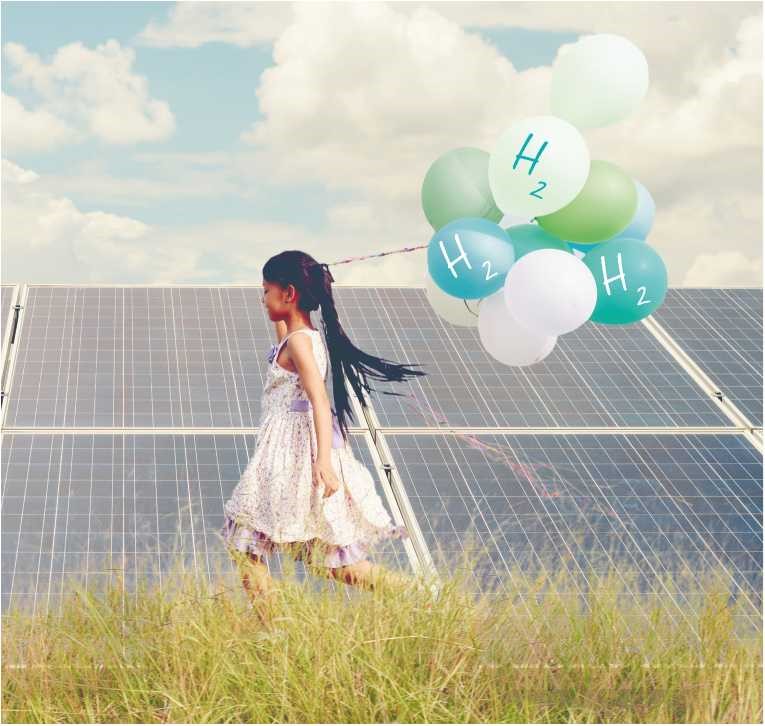
QAZAQ GREEN. The amount of hydrogen produced in eco-friendly ways across the world could expand about 40 times in eight years from 2022, a recent study by the International Energy Agency showed, Kyodo News reports.
Global hydrogen output by water electrolysis or other means with low carbon dioxide emissions could grow to 38 megatons in 2030 from less than 1 megaton last year, which was "very similar to in 2021," according to the IEA's Global Hydrogen Review 2023.
The prediction, on the basis of already announced projects, reflects efforts by many nations aiming for net-zero greenhouse gas emissions to produce carbon-free production of hydrogen, a next-generation energy source emitting no CO2 when combusted.
Meanwhile, it remains unclear if the output of such clean hydrogen will grow as expected. The IEA said only 4 percent of the estimated production would come from projects that were finalized or are under construction, and the rest of the projects are still undergoing feasibility studies or "at very early stages."
"Given that further developing these projects takes time, efforts over the coming years will be critical to ensuring that these projects can become operational by 2030," the Paris-based body said in the annual report.
The 31-member agency also warned that ongoing global inflation is "threatening the bankability of projects across the entire hydrogen value chain, which are highly capital intensive," as their financial costs are surging.
The latest forecast for the 2030 hydrogen production from announced projects represents an over 50 percent growth from its estimate made in 2022.
Out of the predicted 38 megatons of output in 2030, 27 megatons would be made from water electrolysis, up from below 100 kilotons in 2022, and 10 megatons would come from fossil fuels with "carbon capture, utilization and storage," or CCUS.
CCUS is a way of effectively neutralizing the emission of CO2, which is discharged in the process of making hydrogen, by storing it deep underground among other measures.
In general, hydrogen made through electrolysis using renewable energy is called "green hydrogen," and that produced from fossil fuels such as natural gas and coal with net-zero CO2 emissions by means including CCUS is "blue hydrogen."
Due to its cost-effectiveness, over 80 percent of the global hydrogen production in 2022 was produced from fossil fuels without CCUS, according to the IEA. Such hydrogen is widely known as "gray hydrogen."
Kazakhstan and World Bank discuss energy integration in Central Asia
Construction of 500 MW wind power plant begins in Karaganda region
50 MW solar power plant auction winner determined in Kazakhstan's Southern Grid Zone
Rooftop solar panels: Kyrgyzstan prepares rules for households and businesses
Europe’s rising heat: Can renewables provide the solution?
Winner announced for 100 MW solar auction in Kazakhstan
Chinese company ready to invest $1 billion in solar and wind generation in Kyrgyzstan
Meta to invest in space solar energy and ultra-long-duration energy storage
Tokyo pushing plan for world’s biggest floating wind power farm
Kazakhstan cancels 50 MW solar auction due to lack of participants
Tokayev ratifies Green Energy Corridor Agreement with Azerbaijan and Uzbekistan
China raises RES share to 60% of total installed capacity
Batys Kaspiy Energo wins auction for 250 MW wind farm in Atyrau region
Ember: Renewables overtake coal in global power generation for the first time
Kazakhstan continues accepting applications for May RES auctions
Water-energy balance of the region discussed by ministers of four Central Asian countries
Just transition: leaving no one behind in the energy transformation
CAREC and Central Asian universities sign new memoranda on green skills development
Kazakhstan and UNECE discuss energy resilience and low-carbon technologies
100,000 jobs and a skills gap: how Central Asia is preparing for the renewables boom