

World News27.02.2024
Germany’s last major solar module producer to close in March


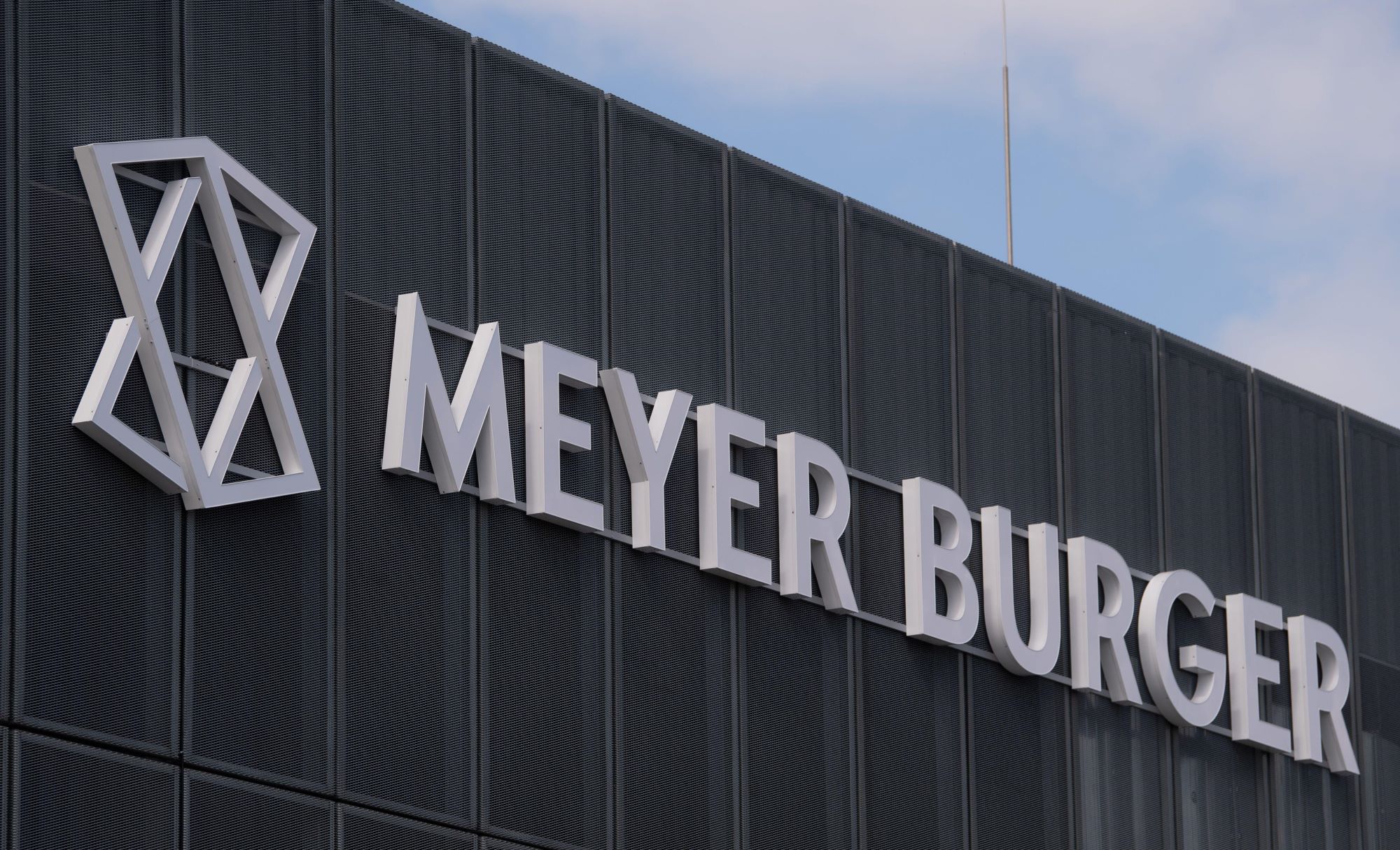
QAZAQ GREEN. Swiss solar company Meyer Burger will close its Freiberg plant to focus on its US production sites, after years of posting losses, reducing the overall EU solar panel production capacity by about 10%, according to Euractiv.
Following a drop in share prices by 90% from a short-lived 2018 recovery and years of posting losses, the Swiss company is closing down shop in Germany as of March, with company shareholders blaming the business woes on competition from China and a lack of safeguards in Europe.
“The lack of European protection against unfair competition from China is jeopardising almost four years of hard work by outstanding employees in Europe,” the board of Sentis, the company’s biggest shareholder, said in a statement on Friday (23 February).
Meyer Burger, the biggest producer of solar modules in Germany, employs some 500 workers at its solar module assembly plant in Freiberg, Saxony. The company is part of a wider cluster known as “Silicon Saxony,” a welcome boost to a region lagging behind economically.
In 2023, the plant produced 650 MW worth of modules – around 5% of installed capacity in Germany – although the company was unable to sell all of its products. Europe installed 56 GW of solar in 2023 , while total European production capacity comes in at 6 GW.
The decision to close down its solar module assembly had been a long time coming. In January, the company’s pleas for the government to provide subsidies by mid-February were not answered.
In Berlin, political discussion on a package for domestic solar producers – called “Solar package I” – is being stalled by lack of agreement within the three-party government and looks unlikely to be agreed before late March.
The Swiss company is moving to the US and is raising up to 250 million CHF (€262 million) to finance new production sites in Colorado and Arizona. It expects to receive €1.4 billion in tax credits from the USA’s massive clean tech support vehicle, the Inflation Reduction Act.
“In addition, focusing more strongly on our US business makes us independent of political decisions in Europe,” said CEO Gunter Erfurt.
The Brussels process
The EU’s tool for ensuring companies like Meyer Burger stick around, the Net-Zero Industry Act (NZIA), was agreed in early February, but implementing it will take years.
It may give the industry a long-term perspective by enabling it to be competitive on criteria other than price, where Chinese producers are hard to beat. Instead, the NZIA will empower EU countries to tailor 30% of capacity auctions to domestic producers.
Given that enforcement of this new EU law will not happen before 2025, the short-term perspective of the solar industry looks increasingly glum.
The NZIA “doesn’t negate the need for emergency support. Manufacturers have weeks left of survival, this emergency requires urgent action from EU and national authorities,” industry association SolarPower Europe said on 6 February.
Sunlight instead of filters: Chinese researchers develop solar catalyst to reduce waste odours
20 MW solar power plant commissioned in Shieli
India approves grid development scheme to integrate 135 GW of renewable energy
A major wind farm worth KZT380 billion be built in Kostanay region
Kazakhstan Development Bank secures up to $200 million for renewable energy projects
Exus acquires four US solar projects totalling 715 MWp
AIP acquires two Swedish wind farms totalling 312 MW
Zayed Sustainability Prize 2027 finalists include Astana school
Germany awards 480 MW of solar-plus-storage projects
Scientists develop method to convert end-of-life solar panels into silicon carbide
Hyperborea 150 MW wind farm reaches full design capacity
European ports test renewable energy and clean energy solutions
Australia grants first licence under new offshore infrastructure regime
Samruk-Kazyna and Chinese companies agree to jointly develop up to 1 GW wind power project
Kazakhstan completes final auction for 50 MW solar power project
Australia approves 1.4 GW Wongalee wind project
Kazakhstan and China agree on 450 MW wind power projects in Akmola region
Almaty to host Kazakhstan-China Investment Forum on September 25
Third round of trilateral talks on Kambarata HPP-1 project held in Almaty
Yerzhan Yertayev appointed Vice Minister of Energy of Kazakhstan