

Environmental policy10.09.2025
Waste Management in Kazakhstan: Problems and Prospects for Technological Solutions


Yedil Zhanbyrshin, Chairman of the Committee on Ecology and Nature Management of the Mazhilis of the Parliament of the Republic of Kazakhstan, Doctor of Technical Sciences
Global ecology and sustainable waste management have emerged as critical priorities for most nations in recent decades. Kazakhstan faces serious challenges common to many developing countries: escalating household waste volumes, inadequate technological infrastructure, deteriorating ecosystems, and the urgent need to reduce carbon emissions.
These challenges demand a comprehensive approach and innovation adoption. The key task involves overcoming existing barriers, the so-called "roadblocks", that impede the development of effective waste disposal and recycling systems. Eliminating these barriers is essential for introducing modern technologies and facilitating knowledge transfer that can fundamentally transform the current situation.
An effective waste management system, integrated into carbon neutrality strategies and based on innovative technologies with new regulatory frameworks, represents one of the primary tools for achieving climate objectives.
According to the Environmental Performance Index (EPI-2024), Kazakhstan ranks 99th out of 180 countries in waste management. Individual indicators remain concerning: 84th in waste per capita, 89th in controlled disposal, and 54th in recycling performance.
Currently, only 3.7-4% of waste undergoes recycling, while leading countries such as Germany, South Korea, and Sweden achieve recycling rates of 50-95% for municipal solid waste.
Kazakhstan stands at a crossroads: continue with the linear "collection-disposal" model or make a strategic shift toward a circular economy, where waste from one production process becomes a resource for another. The transition to such a model is ambitious yet realistic within the context of global trends and fourth industrial revolution technologies.
The key to success lies in technological transformation and implementing advanced environmentally friendly waste management solutions. Kazakhstan must not only increase processing capacity but also develop a comprehensive, resource-oriented waste management system.
Adapting experiences from countries like China, Singapore, South Korea, Germany, Sweden, and Japan—which have successfully implemented circular economy principles using cutting-edge technologies and active legislative support—could prove instrumental in introducing advanced solutions in Kazakhstan.
The Current Situation in Kazakhstan
Kazakhstan generates approximately 4.5-5 million tons of solid domestic waste (SDW) annually. In 2024, over 3.8 million tons were officially collected, representing a 23.8% increase from 2022. Simultaneously, landfill disposal levels continue rising: about 3.2 million tons were landfilled in 2024, with total landfill volumes reaching 48.3 million tons.
Since 2022, annual landfill volume increases of 10-12% significantly exceed the population growth rate of 1.3-1.4% per year.
Of the 3,016 registered landfills, only 20.7% comply with environmental standards, indicating poor oversight and inadequate infrastructure development. Regional waste sorting remains weak and inconsistent.
In 2024, 1.06 million tons of waste were sent for sorting from 19 cities. Of this amount, only 29.1% was sorted and merely 3.7% was recycled into products. Recycling capacity distribution is uneven: Astana achieves 100% utilization, Karaganda and Aktobe reach approximately 90%, Almaty attains 73%, while other regions manage 26.4-60%.
The situation proves particularly challenging in rural areas. Regions with high rural populations (Almaty, Turkestan, and Zhambyl regions) have limited or nonexistent solid waste collection and removal services. Container sites and centralized removal systems are virtually absent.
Institutional Barriers and Legislative Framework
Kazakhstan's current legislative framework for waste management does not yet fully support the transition to a circular economy. The primary document, the Environmental Code of the Republic of Kazakhstan, establishes principles of "polluter pays," sustainable development, and pollution prevention. However, no specialized industry law regulates integrated waste management.
Clear regulations for separate collection, digital accounting, and waste stream monitoring are absent, as are incentives for recycling and closed-loop systems. Coordination between the Ministry of Ecology and Natural Resources and the Ministry of Industry and Construction proves difficult, while local authorities lack funding and methodological support.
Additionally, regional waste management schemes are either nonexistent or underdeveloped, hindering the creation of unified technological chains from collection and sorting to recycling and disposal.
International Experience and Technological Solutions
With environmental risks escalating, increasing numbers of countries are abandoning traditional linear "production-consumption-disposal" approaches in favor of circular economy models.
Global waste management practices demonstrate several sustainable technological megatrends:
Digitalization represents the first key trend: automated accounting, real-time waste flow tracking, and sensor and analytical platform usage for managing collection, logistics, and processing.
Robotization and artificial intelligence constitute the second trend, enabling high-precision fraction sorting that significantly improves secondary resource quality and reduces contaminated raw material proportions.
Waste-to-energy (WtE) forms the third megatrend: modern waste incineration plants with multi-stage filtration and heat and electricity generation are becoming integral components of national energy systems, as demonstrated in Sweden and China.
Mobile, modular, and decentralized processing facilities represent the fourth trend, particularly relevant for remote and sparsely populated regions.
Extended Producer Responsibility (EPR) strengthening constitutes the fifth megatrend, requiring businesses to participate in disposing of their own products and packaging. This trend implies companies' full responsibility for collection and recycling of packaging and goods, plus digital platform introduction for control and reporting.
Convergent technologies at the intersection of AI, biotechnology, nanomaterials, and sensor technology form the sixth global trend, enabling intelligent, energy-efficient, and environmentally friendly waste management solutions. Biotechnology and organic processing represent key areas for managing food and organic waste through anaerobic digestion and composting, successfully implemented in Asian countries.
It is important to note, Kazakhstan should integrate best practices from different global regions, including Europe, the United States, China, and Southeast Asian countries.
Europe: Germany, Sweden, and the Netherlands actively develop circular economies by introducing WtE plants and intelligent AI-powered robotic sorting systems. Strict environmental standards accompany green technology support measures including grants, subsidies, and regulatory sandboxes that allow real-world innovation testing with minimal administrative barriers.
Sweden has virtually eliminated landfill disposal (less than 1%). The national Waste-to-Energy system converts waste into heat and electricity, with emissions strictly controlled by automatic filters and monitoring systems. The country imports waste from neighboring nations, viewing it as an energy resource.
Germany actively employs robotic sorting technologies with AI elements and computer vision, ensuring accurate fraction separation (paper, plastic, metal, organic matter). This increases recycling profitability and reduces contaminated recyclable materials. Germany leads in implementing the Extended Producer Responsibility (EPR) model, where companies bear packaging responsibility from production to recycling.
The Netherlands sends only 7% of waste to landfills—the remainder undergoes various recycling processes. Twenty percent of total electricity production derives from waste. Waste incineration produces steam convertible to electricity for manufacturing or home heating. Over 1 million tons of waste from major European countries including the United Kingdom, Ireland, and Italy are incinerated annually in Dutch facilities.
China generates over 230 million tons of municipal solid waste annually, making it the world's largest waste producer. Urbanization and rising prosperity have increased waste volumes, with 60-70% still landfilled. The average is 1 kg per person daily (up to 1.5-2 kg in megacities). Organic waste comprises 45-50% and plastic 15-20%.
The country actively develops waste incineration plants with multiple filtration systems, plus recycling and WtE infrastructure. The Law on Prevention and Control of Solid Waste Pollution (2016) regulates the entire waste management cycle. The national Green City program encourages waste reduction and recycling, single-use plastic restrictions exist, and Shanghai has introduced mandatory separate collection.
Key technological solutions include over 600 WtE plants, biogas plant development, chemical plastic recycling, and Extended Producer Responsibility (EPR) programs.
The Changsha experience deserves special attention, where a super-eco-friendly Waste-to-Energy incineration plant has operated for several years. This WtE plant uses 9,000 tons of unsorted municipal solid waste and 1,000 tons of sludge daily as fuel to generate 200 MW of electricity.
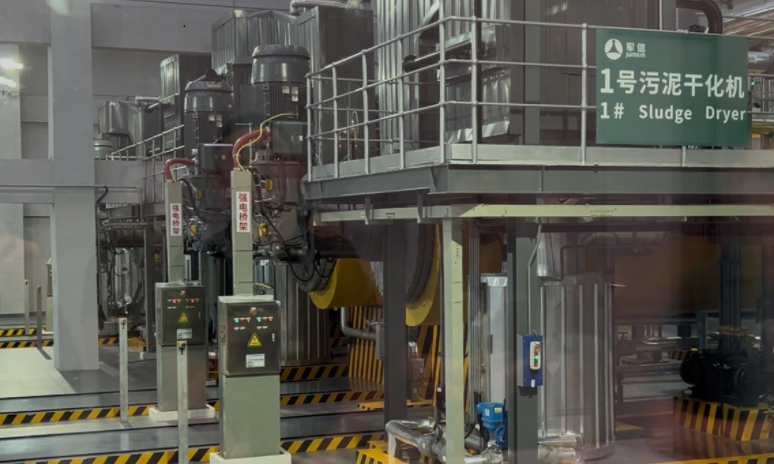
The Pinghu Industrial Park in Zhejiang Province demonstrates a modern approach using digital platforms for real-time waste flow tracking, ensuring transparency and control at all stages. Comprehensive sludge treatment includes biochemical processing, dewatering, drying, then use in building block and cement production, plus incineration for thermal energy. Such solutions allow up to 90% sludge recycling without landfilling, significantly reducing environmental burden.
China has simplified environmentally friendly factory and waste incineration plant construction permitting, lowering barriers for foreign and private investors. The country actively develops technology incubators helping new companies adapt to local conditions and supporting innovation development.
Southeast Asia
South Korea focuses on digital control and personal responsibility within a smart city model where household waste management uses digital platforms and IoT devices, monitoring container fill levels and optimizing collection routes. This reduces costs and improves environmental conditions.
Smart containers with RFID tags and weight sensors record disposed waste volume and type. This enables a "pay-as-you-throw" model encouraging citizens to sort and reduce waste volumes. Consequently, organic waste recycling rates exceed 95%, among the world's highest.
Singapore operates mobile waste processing units solving problems in remote and sparsely populated areas. WtE technologies are implemented through public-private partnership models (Design, Build, Own) emphasizing innovation and efficiency. The Tuas Nexus project—integrating waste disposal and water treatment with energy autonomy and biogas technologies—exemplifies a comprehensive approach.
Singapore has implemented Extended Producer Responsibility (EPR) systems for electronic and packaging products through Producer Responsibility Schemes (PRS), including collection, recycling, reporting, and 3R (Reduce, Reuse, Recycle) program obligations.
A Regulatory Sandbox accelerates environmental innovation introduction by testing technologies with temporary regulation relaxation and risk control. WtE sector pilots include container gasifiers for bio-waste, biochar production, and reverse logistics platforms for waste oil collection.
Singapore also employs smart containers and RFID tags for waste flow control, increasing collection and recycling efficiency.
Japan emphasizes plasma gasification, cutting-edge technology breaking down waste at temperatures above 3,000°C. This produces synthesis gas for energy generation and vitrified slag for construction. Islands are built from waste incineration slag. This virtually eliminates toxic residues and landfill needs.
Food waste produces organic fertilizers or biofuel. Recycled cooking oil converts to biofuel powering city buses and garbage trucks.
Taiwan's single landfill site could serve as a global model. According to the Taiwan Environmental Protection Administration, 55% of all received waste is recycled. This makes the densely populated country of 23.5 million people a leader alongside Austria, Germany, and South Korea. This figure substantially exceeds the United States, where OECD data indicates approximately 35%.
Many Southeast Asian countries actively encourage foreign investors through tax breaks, grants, and subsidies for new household waste management technologies.
United States: The United States demonstrates a comprehensive approach combining legislative instruments, digital technologies, and recycling. Several states have implemented Extended Producer Responsibility (EPR) systems requiring manufacturers to assume responsibility for packaging and product lifecycle management.
IoT sensors in containers optimize collection routes, while biological processing and composting capacities develop. Some cities implement Zero Waste initiatives aimed at reducing waste generation throughout product lifecycles.
Central Asia
Uzbekistan leads Central Asia in WtE and waste incineration technology implementation. Several large plants built in recent years have significantly improved waste management. Modular installations in small settlements reduce infrastructure costs and increase technology accessibility.
Legislation is becoming more flexible, creating favorable investor conditions, simplifying procedures, and reducing environmental barriers. Tax incentives and subsidies support companies applying recycling innovations and environmentally friendly production for foreign technology introduction.
The Kyrgyz Republic has begun construction of three WtE plants with the support of Chinese companies possessing state-of-the-art technologies.
Considering international experience, a strategic step toward sustainable development for Kazakhstan involves opening innovation floodgates in household waste management.
We lack civic awareness and democracy mechanisms in household waste management processes. Consistent Parliamentary and Government actions can create sustainable circular economy systems, improve citizen quality of life, and ensure long-term environmental safety.
International experience confirms that sustainable household waste management requires comprehensive approaches combining legislation, technology, and economic incentives. For Kazakhstan, the key task is removing barriers to advanced solution and technology introduction.
1. Legislative Initiatives
Industry-specific law with digital accounting: Current waste regulations are scattered across the Environmental Code and subordinate legislation, lacking digital waste flow tracking systems. Expert community discussions are underway regarding new industry waste management legislation that should establish unified online platforms for waste flow accounting, monitoring, and control, becoming the regulatory foundation for sustainable waste management systems based on circular economy principles.
Current laws mention recycling and reuse but lack clear closed-cycle concepts with target indicators for reducing landfilling and increasing recycling, as in the EU.
Regional programs considering logistics: Current programs are declarative and rarely account for transport schemes and investment attractiveness. Each region needs mandatory logistics maps and economic justification.
Technological priorities: WtE is regulated by decrees (including No. 166-p of June 13, 2025) but not legally enshrined as a priority. Robotic sorting and plasma gasification lack regulatory framework reflection, with no implementation standards or incentives.
Strengthening local authority powers and funding: Local authorities bear waste responsibility but face funding limitations. Investment attraction mechanisms and long-term recycling or WtE planning are not established.
Climate strategy integration: WtE and circular economy are tools for reducing greenhouse gas and methane emissions from landfills while increasing recycling and reuse. This will reduce carbon footprints, create jobs, and increase energy security.
2. Technological Priorities
WtE plants adapted to local conditions: Mixed waste incineration, including sludge with preliminary dewatering. Rejecting costly full sorting at initial stages, as in China.
Environmental safety: Filtration systems capturing over 98% of harmful emissions and ash.
Pilot regions: Launching projects in capitals or large cities where waste concentration and energy networks allow WtE integration.
3. Innovation Introduction Measures
Simplified auctions: Reducing contractor requirements while imposing high environmental requirements on supplied technologies and reducing financial guarantees.
Regulatory sandboxes: Creating technology clusters (hubs) for testing technologies with minimal administrative barriers.
EPC contracts: Comprehensive "design-procurement-construction" models for transparency and reduced lead times.
Legislative measures development: Stimulating waste management innovation.
Investment incentives: Subsidies, tax breaks, long-term contracts.
Conclusion:
Solving household waste management problems requires systematic and comprehensive approaches based on modern technology combinations, effective legislation, and economic incentives.
Removing administrative and market barriers represents a key step toward building sustainable systems capable of ensuring environmental safety and economic development in Kazakhstan.
Transitioning to circular economies is impossible without innovation and creating conditions where waste becomes a resource. Success is only possible through state, business, and society partnerships supported by modern regulatory frameworks, flexible regulatory conditions, and high citizen environmental responsibility levels.
Kazakhstan and World Bank discuss energy integration in Central Asia
Construction of 500 MW wind power plant begins in Karaganda region
50 MW solar power plant auction winner determined in Kazakhstan's Southern Grid Zone
Rooftop solar panels: Kyrgyzstan prepares rules for households and businesses
Europe’s rising heat: Can renewables provide the solution?
Winner announced for 100 MW solar auction in Kazakhstan
Chinese company ready to invest $1 billion in solar and wind generation in Kyrgyzstan
Meta to invest in space solar energy and ultra-long-duration energy storage
Tokyo pushing plan for world’s biggest floating wind power farm
Kazakhstan cancels 50 MW solar auction due to lack of participants
Tokayev ratifies Green Energy Corridor Agreement with Azerbaijan and Uzbekistan
China raises RES share to 60% of total installed capacity
Batys Kaspiy Energo wins auction for 250 MW wind farm in Atyrau region
Ember: Renewables overtake coal in global power generation for the first time
Kazakhstan continues accepting applications for May RES auctions
Water-energy balance of the region discussed by ministers of four Central Asian countries
Just transition: leaving no one behind in the energy transformation
CAREC and Central Asian universities sign new memoranda on green skills development
Kazakhstan and UNECE discuss energy resilience and low-carbon technologies
100,000 jobs and a skills gap: how Central Asia is preparing for the renewables boom