

International experience08.12.2025
Getting a Good Deal: Why Central Asia Needs Negotiation Support for FDI



Richard Dion, Senior Adviser, CONNEX Support Unit, Berlin, Germany, dion@connex-unit.org
Central Asia is entering a new era of investment. With ambitious plans for infrastructure and renewable energy megaprojects, the region is poised to attract billions in foreign direct investment. These projects will shape the next generation—but as governments sign long-term contracts, a critical question arises: are they getting the best deal?
While Central Asia has seen dramatic transformation through both private and public investment, governments must reflect on the quality of those deals. The stakes are high, and the balance of power in negotiations often favours the investor.
What governments are up against / Value of negotiation support
The private sector (or a State-Owned Company) typically comes to the table with few constraints. The business development teams are large, often comprising of 30-40 people across legal, financial, technical, strategic and social/environmental expertise. These teams are seasoned, having negotiated multiple contracts across jurisdictions and understand the business value of coordination.
In contrast, many governments have limited financial and human resources. Some rely on external transaction advisors, but many are left to navigate complex negotiations on their own. This imbalance can lead to suboptimal outcomes, especially when governments are under pressure to secure investment quickly.
Negotiation support can help level the playing field. With the right expertise, governments can critically evaluate a company’s financial model, analyse feasibility studies, and use scenario planning to understand the long-term tax and revenue implications of a contract. They can also clarify operational and maintenance obligations and third party access rights for large-scale infrastructure and prioritise key negotiation points based on national interests, such as contractually agreeing on the procurement of the use of local goods and services.
Governments should consider and critique an investor’s motivation and most importantly, how a project fits in with a government’s priorities. Two important aspects are the financial model and the feasibility study. Both of those are prepared by the investor, with “its” view of the project. What is the view of the government? Finally, many governments are receiving unsolicited bids. While governments should be flexible enough to understand how such projects may fit into their priorities, governments should remain more strategy-driven and less opportunity-driven.
Fortunately, support mechanisms exist. One example is CONNEX. They offer multidisciplinary, short-term and tailored expertise to requesting governments at no cost. CONNEX is a G7 initiative, focused on supporting governments to negotiate better contracts in infrastructure, renewable energy and mining (www.connex-unit.org). In over 40 projects around the world, CONNEX has offered that tailored advice, which has meant millions of dollars more in revenues for several countries. In one case, CONNEX’s financial modeler kickstarted a process in a mining negotiation that led to an in principle agreed multibillion dollar billion USD boost for the government. The modeler was involved for just 60 days and led to a massive change in government revenue options.
Considering the coming realities
Given the long-term aspects of some contracts, governments should be keeping in mind how much the landscape of contracts have changed. Looking back at the year 2000, the world was considerably different. The cliché aside of the only constant is change, governments should, as much as possible, try to understand what is on the horizon in contracts and begin to broach certain areas. Three issues that stand out are climate change, circularity and an age of disruption.
Climate change - in 2000, the world knew about climate change, but did nothing about it in contracts. Fast forward to 2025 and it seems logical to include climate change in contracts. Infrastructure is the immediate sector, in which climate change should be discussed. Not only is infrastructure under more strain through climatic conditions, but GHG emissions from concrete and steel – two of the largest inputs for infrastructure – are extremely carbon intensive.
Circularity - the use and reuse of materials – is gaining traction in policy and investment circlesand has not made it into contracts. However, given the billions of dollars required for infrastructure as well as the energy required to make steel, concrete or other inputs into infrastructure, in the creation of those inputs (so-called embodied energy), considering how all materials are sourced and reused can have considerable budget implications.
Materials - while concrete and steel are usually the mainstays of infrastructure, some possibilities exist to adjust materials in the future. First off, which materials will be used (and how are new materials regulated by a government in infrastructure projects)? The innovation and evolution of materials (such as composites, used in wind turbines or glass fiber reinforced polymer (GFRP)) may provide investors and governments with more options. Second, when materials are used, what are the benefits to the project, and how are those benefits “split” or shared by the investor and the government?
Pressure of getting it right
Once they are signed, many of these contracts are virtually impossible to change. A government may get lucky that a company has some flexibility, but frankly, that company has shareholders and they want predictability. Contracts, in general, are not prone to further discussion. As the CEO of a major American company once said, “a contract is a contract”. Considering the enormous rise in arbitration (2025-1 ENG - The ICSID Caseload Statistics (Issue 2025-1).pdf), governments should try as much as possible to guard themselves against arbitration, which can turn a country’s investment reputation toxic virtually overnight.
Finally, looking at the last 25 years, a great deal has changed in many sectors and in many geographies. Is the era of “disruption” settling in or is the last several years an anomaly and the world will go “back to normal”? Looking at the last 25 years (and the previous 25), disruption feels like a smart bet. Building in flexibility in the contract, through periodic review or avoiding situations of “all or nothing”, will not only avoid legal problems, potentially arbitration, but also preserve the value of assets over generations.
With the right negotiation support, governments can secure not just investment—but a fair, future-proof deal.
CONNEX Contract Negotiation Support
IMPACT STORY: MONTSERRAT
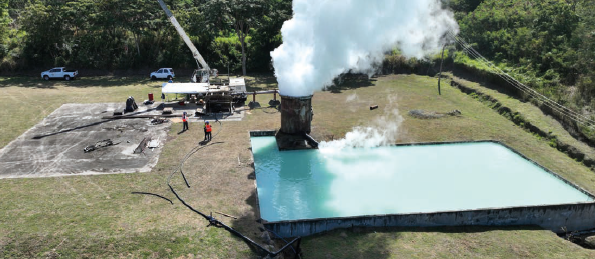
Going Underground: Facilitating Montserrat's Geothermal Journey
THE CHALLENGE
Similar to many small island developing states, Montserrat faces the dual challenges of fluctuating global fuel prices and high shipping costs, with the armed conflict between Ukraine and Russia only exacerbating the situation.
To advance its renewable energy transition, Montserrat's government launched an international tender to develop the island’s geothermal resource, aiming to replace all imported fossil-fuel generation with domestic renewable power, primarily geothermal.
Montserrat’s geothermal potential is concentrated in three wells, two of which can meet current electricity demand. The preliminary project estimate exceeded USD 20 million (XCD 62.8 million), placing it beyond the reach of the national budget.
The project’s scale required specialised procurement, risk management, and investor engagement capacities. Realising the need for external expertise, the government, through the Ministry of Building, Utilities, Infrastructure, Labour, Transportation and Ecclesiastical Affairs (BUILT), requested CONNEX's support.
OUR ROLE
Following agreement on the required scope of expertise, CONNEX mobilised legal, financial, and strategic advisors. This interdisciplinary support enabled the government to navigate the complex tender and design the island’s first geothermal project structure.
Prolonged inactivity and limited infrastructure made well reliability uncertain, and testing in 2022 heightened the technical risks. Advisors helped Montserrat align investor expectations with an objective assessment of well conditions and performance potential.
To reinforce financial resilience, CONNEX proposed integrating climate objectives into the financial model, widening access to financing and increasing investor interest.
Given Montserrat’s limited experience with major energy projects, tender management was challenging. CONNEX introduced modern process approaches, ensuring procedural flexibility and efficient coordination with all stakeholders.
During bid evaluation, officials needed to assess complex technical and financial parameters. CONNEX supported the creation of a qualified evaluation committee and provided training on technical review, company due diligence, and risk assessment.
OUR IMPACT
Incorporating climate objectives helped the government understand the project’s full value: a potential minor tariff increase aligns with Montserrat’s carbon-neutrality trajectory and broader sustainability priorities.
The analysis revealed legal gaps, including arbitration provisions important for large-scale projects. Advisors clarified the legal safeguards required and highlighted areas for improving the investment climate.
Recommendations for updating regulatory frameworks established a basis for stable project implementation, enhancing regulatory predictability and Montserrat’s readiness to attract sustainable investment.
CONNEX's advisors equipped Montserrat's officials with essential skills to engage with bidders, negotiate complex terms - empowering Montserrat's team for managing large-scale renewable energy projects. Ultimately strengthening Montserrat's institutional resilience and readiness for future projects.
Israel to build its largest-ever solar power plant in the Negev desert
Solar pensions and wind dividends: how South Korea is turning renewables into a rural development tool
Kyrgyzstan announces tender for land plots for construction of six small hydropower plants
ADB to invest $70 billion in Asia's power grids and digital infrastructure
Kazakhstan and World Bank discuss energy integration in Central Asia
Construction of 500 MW wind power plant begins in Karaganda region
50 MW solar power plant auction winner determined in Kazakhstan's Southern Grid Zone
Rooftop solar panels: Kyrgyzstan prepares rules for households and businesses
Europe’s rising heat: Can renewables provide the solution?
Winner announced for 100 MW solar auction in Kazakhstan
Chinese company ready to invest $1 billion in solar and wind generation in Kyrgyzstan
Meta to invest in space solar energy and ultra-long-duration energy storage
Tokyo pushing plan for world’s biggest floating wind power farm
Kazakhstan cancels 50 MW solar auction due to lack of participants
Tokayev ratifies Green Energy Corridor Agreement with Azerbaijan and Uzbekistan
China raises RES share to 60% of total installed capacity
Batys Kaspiy Energo wins auction for 250 MW wind farm in Atyrau region
Ember: Renewables overtake coal in global power generation for the first time
Kazakhstan continues accepting applications for May RES auctions
Water-energy balance of the region discussed by ministers of four Central Asian countries