

News Kazakhstan08.10.2025
Path to carbon neutrality: ADB supports Kazakhstan’s energy sector


QAZAQ GREEN. Kazakhstan has set an ambitious target of achieving carbon neutrality by 2060. This goal requires deep modernisation across multiple sectors of the economy — not only in energy, but also in industry, transport, and agriculture. Achieving this transformation demands substantial investment, estimated in trillions of tenge.
A key source of such support is international financial institutions, including the Asian Development Bank (ADB), which has been cooperating with Kazakhstan for more than 30 years. Using this partnership as an example, it is clear why working with multilateral financial institutions is vital and what benefits this brings to the country.
How ADB works
The Asian Development Bank, established in 1966, is one of the world’s largest multilateral development banks. Its mission is to promote inclusive, sustainable, and resilient growth across the Asia-Pacific region. ADB has 69 member countries and holds ‘AAA’ credit ratings from major agencies, enabling it to attract funding on favourable terms and extend financing to member states.
ADB has been working with Kazakhstan for 31 years, notes Utsav Kumar, ADB Country Director for Kazakhstan. The Republic became the first Central Asian country to join ADB in January 1994, and last year the partnership marked its 30th anniversary.
“Over this period, approximately US$7.5 billion has been allocated. The main areas of investment include transport, public sector management, energy, and the financial sector,” says Kumar.
Cooperation is guided by ADB’s Country Partnership Strategy with Kazakhstan, approved in May 2023, which focuses on three priorities: promoting inclusive economic growth, addressing climate change impacts and supporting decarbonization, and strengthening governance and developing capacity.
ADB supports Kazakhstan in meeting its 2030 greenhouse gas reduction targets and its 2060 carbon neutrality goal through investments and projects that already exceed US$500 million in the energy sector.
Key Investment Projects
Currently, four major investment projects are being implemented in the energy sector:
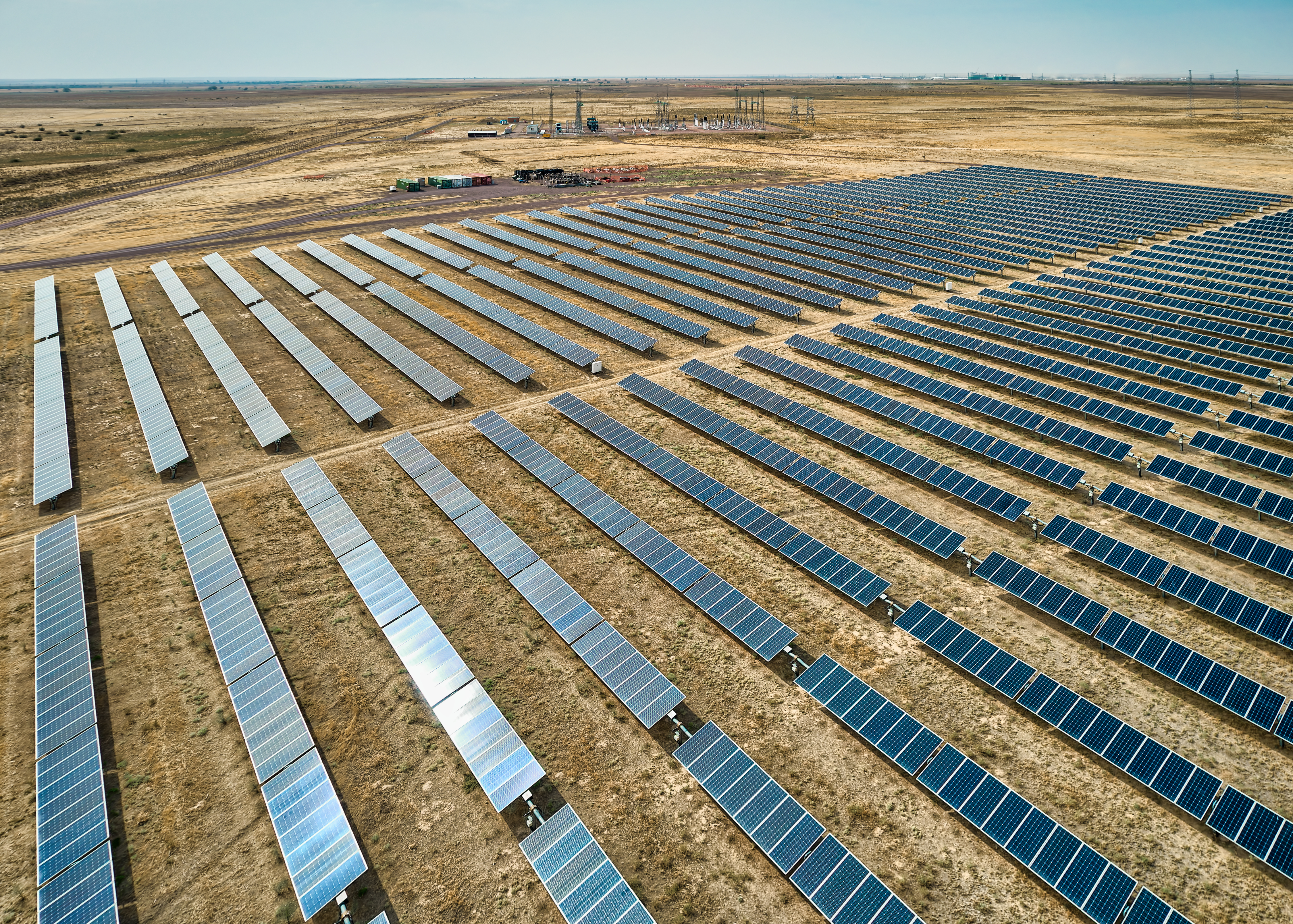
· Two solar power plants with capacities of 100 MW and 50 MW in southern Kazakhstan. According to ADB, both contribute directly to Kazakhstan’s commitments under the Paris Agreement;
· Financing the conversion of Almaty’s CHP-2 from coal to gas, which will reduce CO₂ emissions from 5.1 to 2.3 million tonnes per year, eliminate sulphur dioxide and ash emissions, and significantly reduce CO and NOx. This will improve air quality for 2.2 million Almaty residents;
· A financing agreement with KEGOC to expand and strengthen the southern transmission grid for renewable energy integration, enabling large-scale renewable generation and stabilising power transmission.
These projects are key milestones on Kazakhstan’s path to a green economy, bolstering both energy security and environmental resilience.
According to the Ministry of Energy, by mid-2025 the country’s installed renewable energy capacity exceeded 3.1 GW, accounting for 6.81% of total electricity generation — an almost 9% year-on-year increase. Wind power leads with 1.57 GW, followed by solar (1.26 GW), small hydropower (287 MW), and bioenergy (1.77 MW).
Impact of ADB Support: The M-KAT Solar Power Plant
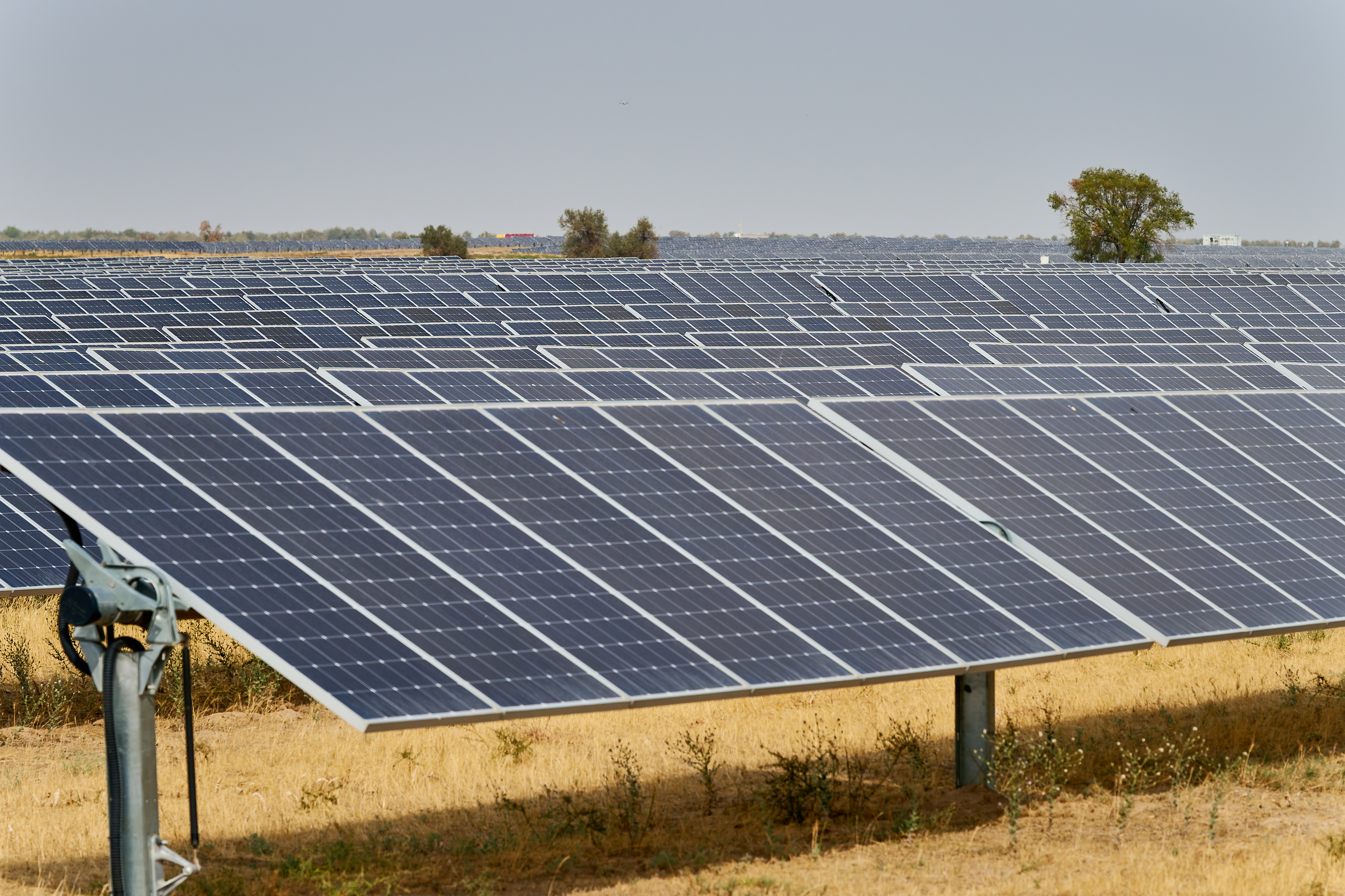
Located near the city of Shu in the Zhambyl region, the 100 MW M-KAT solar power plant is one of the largest in Kazakhstan, producing 176 GWh of electricity annually. The ADB emphasises that this project aligns with its Strategy 2030, which prioritises climate action and environmental sustainability.
The M-KAT project supports sustainable green growth by promoting renewables and strengthening the role of the private sector in Kazakhstan’s energy transition.
The plant operates on a standard photovoltaic principle: sunlight activates electrons in the silicon panels, generating an electric current. The direct current is converted to alternating current via inverters and transmitted to the national grid through KEGOC.
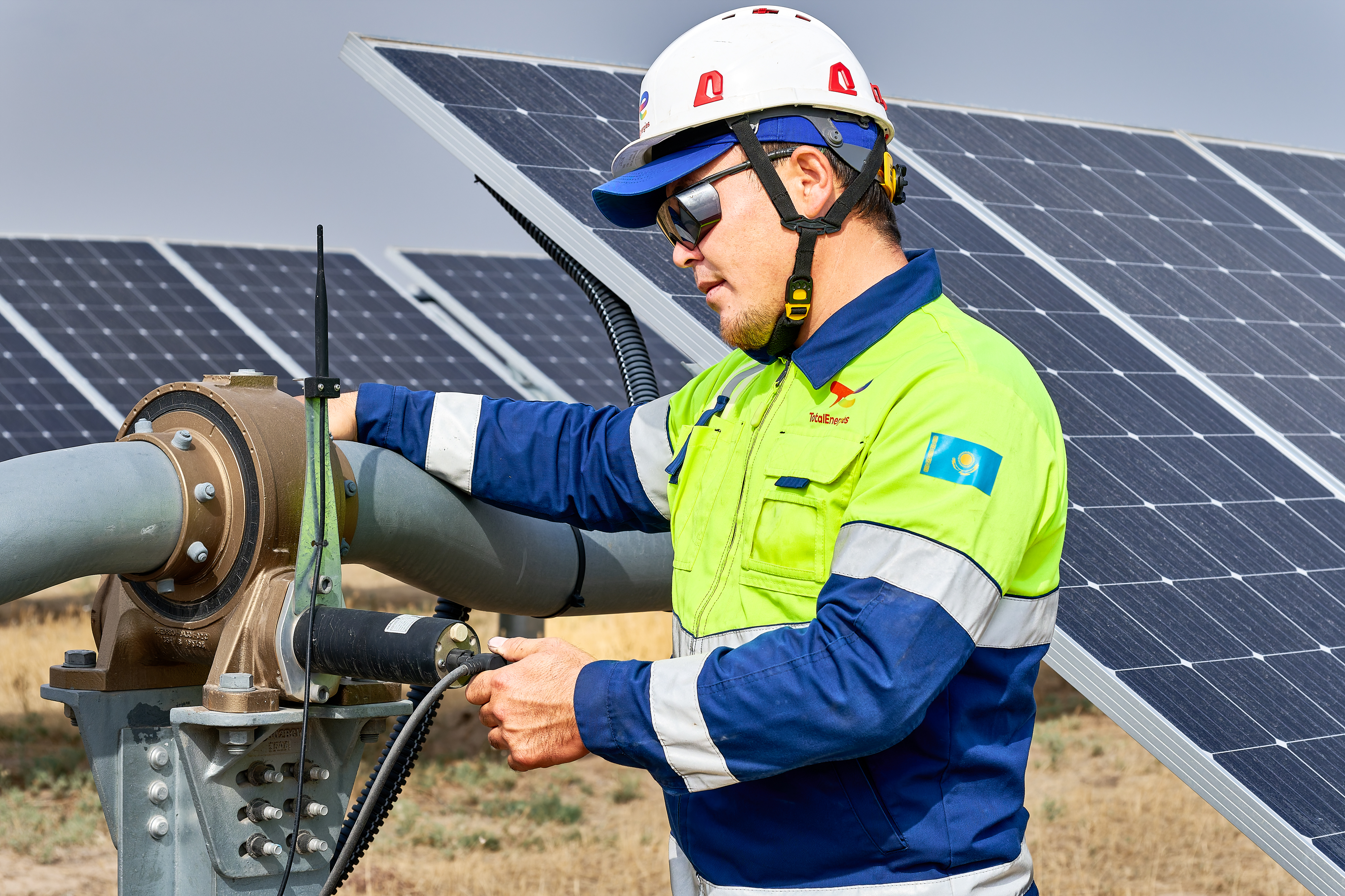
Operations manager Salamat Zhandos notes that monitoring systems cover the entire plant, tracking each panel and inverter for deviations. Staff can remotely oversee performance and quickly address any issues.
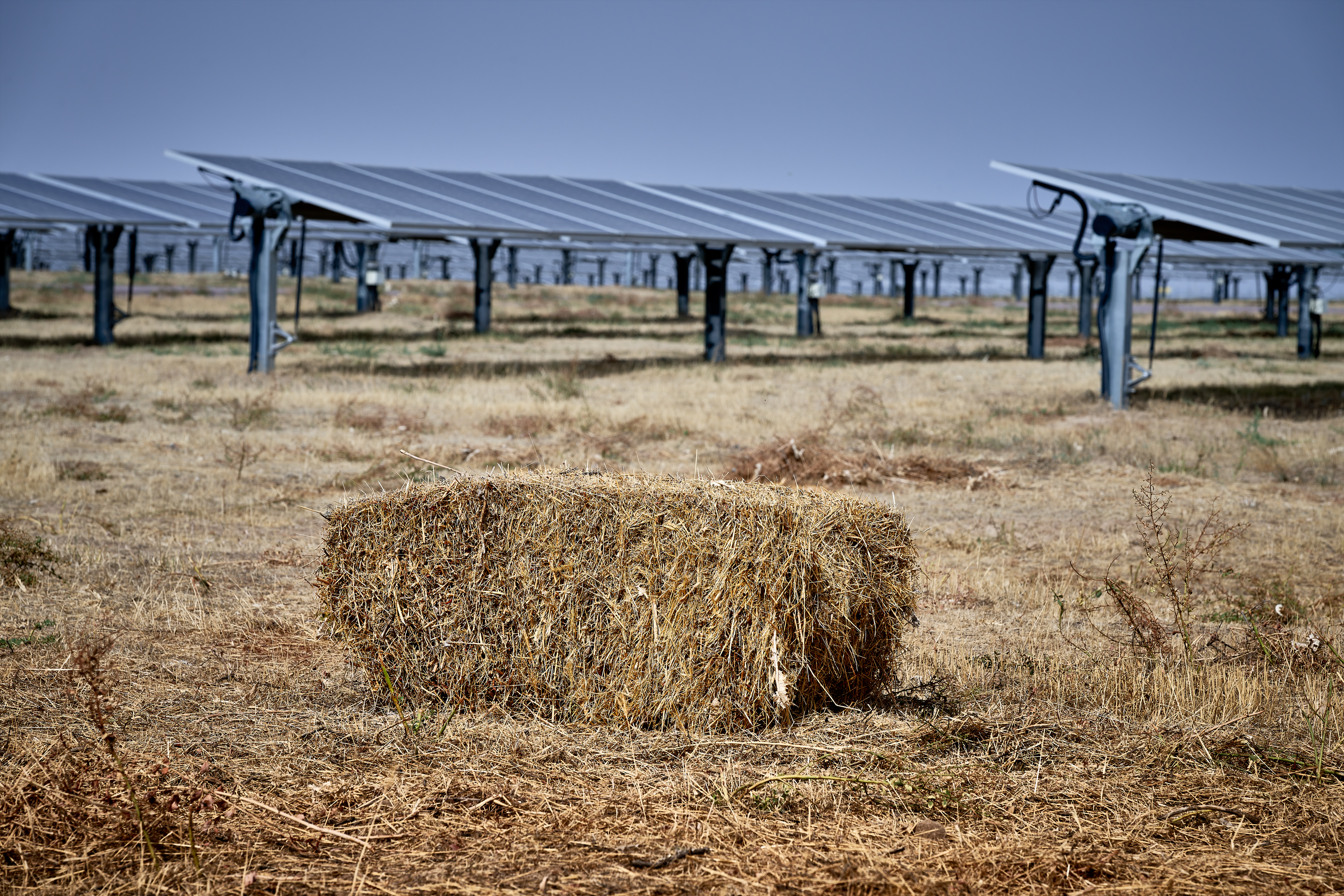
He adds: “We cooperate closely with local farmers. To prevent fires and shading, we regularly mow the grass, and since late 2024 we have used sheep for natural maintenance. This supports local farmers and ensures eco-friendly upkeep without reducing generation efficiency.”
The station’s key technological advantage is its tracking system — panels automatically follow the sun, boosting output by 30–40% compared to fixed installations.
Economically, the plant contributes more than 2.2 billion tenge in taxes to the local budget. Fourteen permanent employees — all local residents — operate the facility, supported by 26 security staff and up to 140 seasonal workers.
Salamat Zhandos adds: “I’m from this area myself. I graduated from the local school, then the University of Energy and Communications in Almaty, and since 2023 I’ve been working for TotalEnergies, which operates the station.”
TotalEnergies also operates the 28 MW Namart project in Kazakhstan. Since 2019, its stations have produced over 1 TWh of electricity, preventing around 1 million tonnes of CO₂ emissions.
The company plans to develop the 1 GW Mirny wind farm in the Zhambyl region — Kazakhstan’s first wind project with an integrated energy storage system to stabilise grid supply.
Making the Energy System Greener
The growing generation capacity requires expansion of the transmission system. The Almaty energy hub currently faces a deficit, with peak winter loads reaching 2,140 MW, mainly covered by interregional transfers.
The region’s 51 power plants — including 4 thermal, 27 hydro, 9 solar (260 MW), and 11 wind (197 MW) — still lack sufficient capacity, relying on 500 kV substations for system stability.
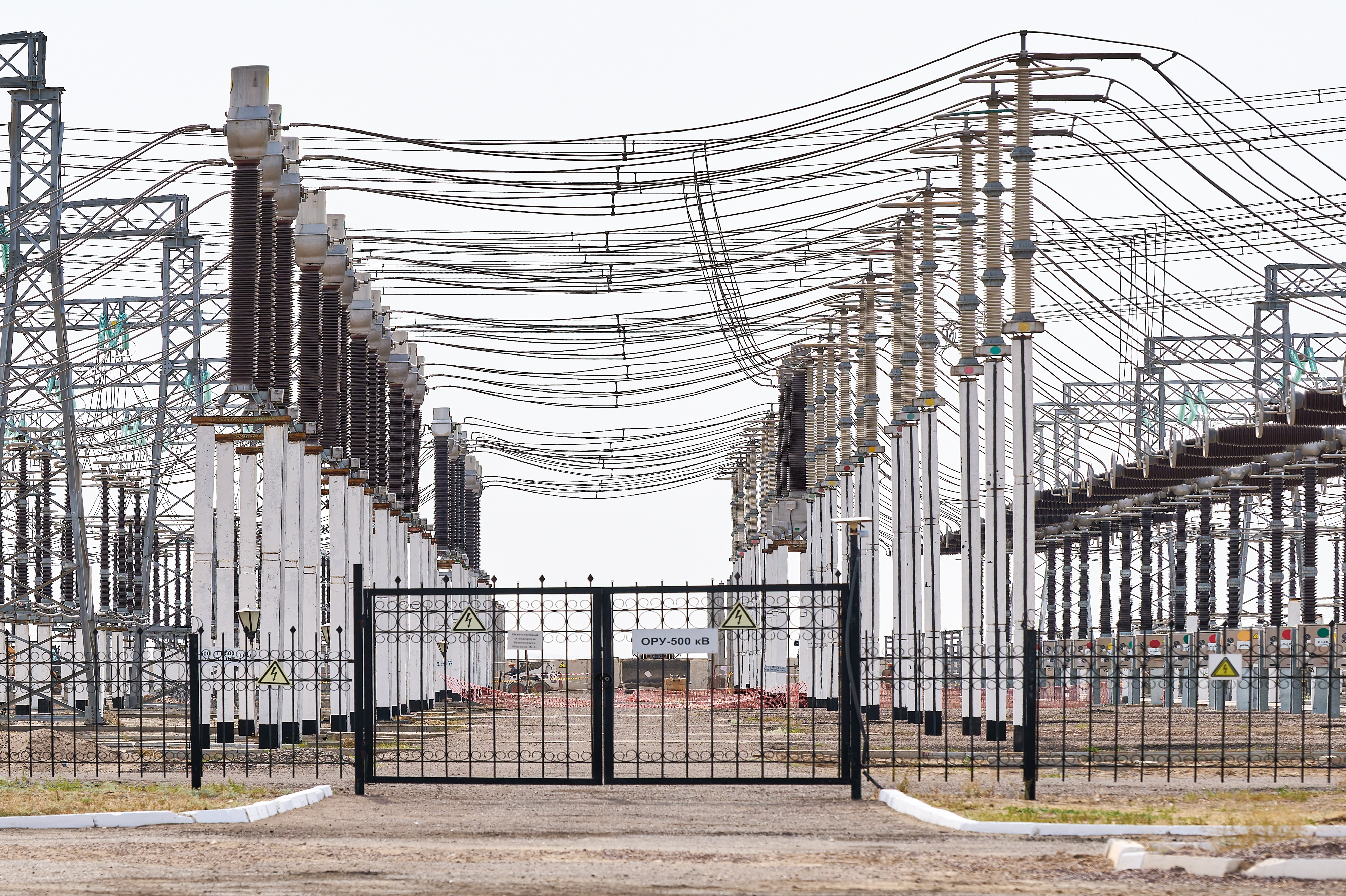
To address this, ADB and KEGOC signed a financing agreement for new 500 kV transmission lines and the modernisation of Shu, Zhambyl, and Shymkent substations. The project will enhance power supply reliability in southern Kazakhstan and facilitate the integration of new renewable sources.
Beyond Financing
ADB’s support for Kazakhstan extends beyond funding. It provides expert assistance, policy advice, and partnerships to advance the green transition.
One initiative is the Energy Transition Facility (ETF), which aims to reduce greenhouse gas emissions and help Kazakhstan achieve long-term decarbonisation goals.
At COP29 in November 2024, ADB and Kazakhstan’s Ministry of Energy signed a memorandum of understanding under which the bank, government, and private sector will jointly explore pathways for a cleaner energy mix while ensuring reliable electricity and heat supply.
ADB also supported the drafting of Kazakhstan’s new Law on Heat Supply, signed by President Kassym-Jomart Tokayev in July 2024. The law improves sector governance, attracts investment for infrastructure modernisation, enhances efficiency, and promotes renewable integration — all contributing to the 2060 carbon neutrality goal.
Additionally, ADB provides technical assistance to the Ministry of Energy and KEGOC to improve power system flexibility through forecasting software and updated tariff methodologies, supporting a smooth renewable energy transition.
In essence, the Asian Development Bank remains one of Kazakhstan’s key partners in its transition to clean energy. Through investment, expertise, and strategic cooperation, ADB helps lay the foundation for a sustainable, low-carbon economy capable of meeting global environmental challenges.
Photos courtesy of ADB press office
Kazakhstan and World Bank discuss energy integration in Central Asia
Construction of 500 MW wind power plant begins in Karaganda region
50 MW solar power plant auction winner determined in Kazakhstan's Southern Grid Zone
Rooftop solar panels: Kyrgyzstan prepares rules for households and businesses
Europe’s rising heat: Can renewables provide the solution?
Winner announced for 100 MW solar auction in Kazakhstan
Chinese company ready to invest $1 billion in solar and wind generation in Kyrgyzstan
Meta to invest in space solar energy and ultra-long-duration energy storage
Tokyo pushing plan for world’s biggest floating wind power farm
Kazakhstan cancels 50 MW solar auction due to lack of participants
Tokayev ratifies Green Energy Corridor Agreement with Azerbaijan and Uzbekistan
China raises RES share to 60% of total installed capacity
Batys Kaspiy Energo wins auction for 250 MW wind farm in Atyrau region
Ember: Renewables overtake coal in global power generation for the first time
Kazakhstan continues accepting applications for May RES auctions
Water-energy balance of the region discussed by ministers of four Central Asian countries
Just transition: leaving no one behind in the energy transformation
CAREC and Central Asian universities sign new memoranda on green skills development
Kazakhstan and UNECE discuss energy resilience and low-carbon technologies
100,000 jobs and a skills gap: how Central Asia is preparing for the renewables boom