

World News03.05.2023
Sweden’s first EV-charging road will power electric vehicles as they drive


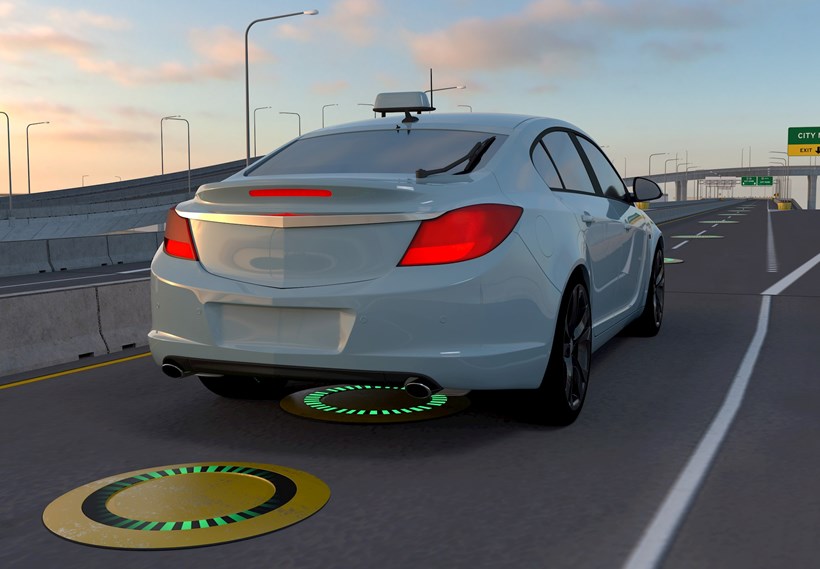
QAZAQ GREEN. The “E-20” highway stretch in Sweden will soon become the nation’s first functioning charging road to juice the batteries of heavy vehicles carrying freight around the nation, Good News Network reports.
E-20, (the E actually stands for Europe, rather than electric) runs between Hallsberg and Örebro in the middle of the country’s three major cities, Stockholm, Gothenburg, and Malmö.
Construction is slated to begin in 2025 along a whopping 21 kilometers of road (13 miles), but it hasn’t been decided which method of charging will be used. Previously-constructed charging roads in Europe have used methods that require outside equipment—overhead wires like a city tram line or undercarriage-mounted arms that attach to an electrified rail along the roadway.
These are highly impractical for regular motorists, who can neither reach the cables nor afford to mount a robotic arm on their car.
The last option, and the only sensible one for cars as well as trucks, is to build wireless charging infrastructure down the center of the lanes that send out an electromagnetic signal to a coil on the underside of the vehicle small enough to be fitted to a sedan or a tractor-trailer.
In any case, in order to conduct long-haul trucking in the larger European countries, there has to be sensible charging infrastructure to prevent the trucks from becoming overloaded with the battery packs necessary to drive long distances.
“If you are going to have only static charging full battery solution for heavy-duty vehicles, you will get vehicles with a huge amount of batteries that the vehicles need to carry,” said Jan Pettersson, Director of Strategic Development at Trafikverket, the Swedish transport administration.
Euronews cited a recent study which found that 412 privately driven cars on parts of Swedish national and European roads could have their battery capacity reduced by more than 50% through a combination of access to electrified roads and home charging.
Furthermore, only 25% of all roads would need to be electrified for the system to work.
GNN has closely followed charging road developments. In 2021, GNN reported that the Indiana Department of Transportation built a wireless charging road designed by the German firm Magment.
In Michigan a year later, Governor Gretchin Witmer announced a 1-mile stretch of road in Detroit would be electrifed—and she contracted the same company that built Sweden’s first wireless charging road pilot program on the Island city of Visby.
Germany, Israel, and Italy have all implemented similar projects.
Kazakhstan and World Bank discuss energy integration in Central Asia
Construction of 500 MW wind power plant begins in Karaganda region
50 MW solar power plant auction winner determined in Kazakhstan's Southern Grid Zone
Rooftop solar panels: Kyrgyzstan prepares rules for households and businesses
Europe’s rising heat: Can renewables provide the solution?
Winner announced for 100 MW solar auction in Kazakhstan
Chinese company ready to invest $1 billion in solar and wind generation in Kyrgyzstan
Meta to invest in space solar energy and ultra-long-duration energy storage
Tokyo pushing plan for world’s biggest floating wind power farm
Kazakhstan cancels 50 MW solar auction due to lack of participants
Tokayev ratifies Green Energy Corridor Agreement with Azerbaijan and Uzbekistan
China raises RES share to 60% of total installed capacity
Batys Kaspiy Energo wins auction for 250 MW wind farm in Atyrau region
Ember: Renewables overtake coal in global power generation for the first time
Kazakhstan continues accepting applications for May RES auctions
Water-energy balance of the region discussed by ministers of four Central Asian countries
Just transition: leaving no one behind in the energy transformation
CAREC and Central Asian universities sign new memoranda on green skills development
Kazakhstan and UNECE discuss energy resilience and low-carbon technologies
100,000 jobs and a skills gap: how Central Asia is preparing for the renewables boom