

News Kazakhstan01.10.2025
PwC: Kazakhstan and Uzbekistan strengthen legal framework for renewable energy development


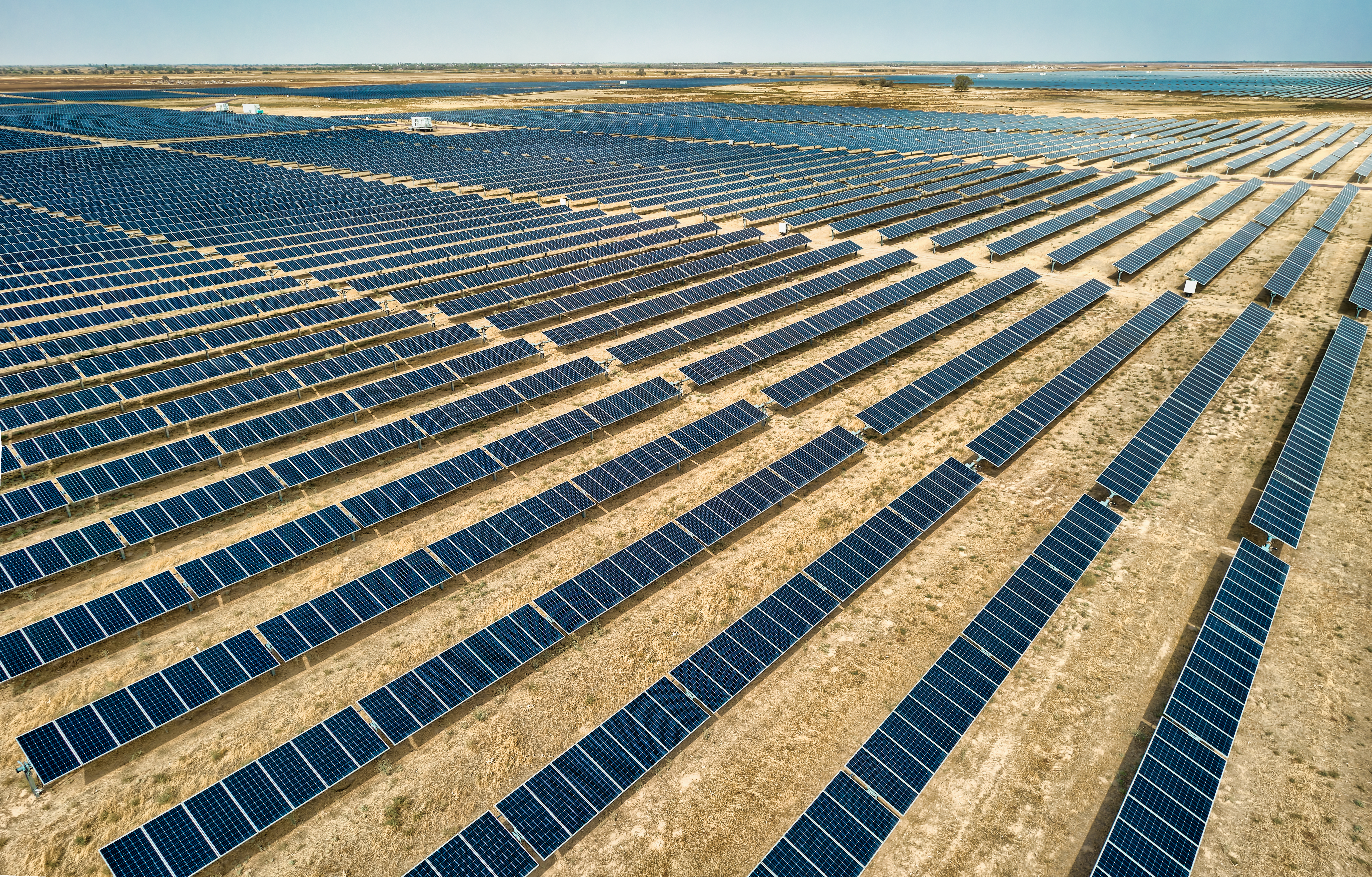
QAZAQ GREEN. Electricity consumption underpins every aspect of life — at home, at work, and beyond. In Kazakhstan alone, electricity consumption has grown by more than 200% over the past thirty years.
Our lives, and those of future generations, depend not only on digitalisation and the adoption of artificial intelligence, but also on energy sources, which remain our most critical resource.
Central Asian countries are increasingly prioritising the development of renewable energy sources. In recent years, Uzbekistan has attracted about US$6 billion of investment in the sector, while Kazakhstan has secured more than US$2.6 billion.
Why has Uzbekistan been able to attract greater renewable energy investment despite its nominal GDP being 2.5 times lower than Kazakhstan’s? Why does Kazakhstan remain highly dependent on fossil fuels? What steps and conditions could accelerate renewable energy development in Kazakhstan?
These issues were discussed with Natalya Lim, Strategy& and Advisory Leader of Eurasia Region (Strategy& is part of the global PwC network) and leader of PwC’s consulting practice in the region.

How would you describe the overall progress of Kazakhstan and Uzbekistan in the transition to sustainable energy?
Kazakhstan and Uzbekistan have set clear decarbonisation and green economy targets within their national strategies. Kazakhstan aims for a 15% renewable energy share in its energy mix by 2030, while Uzbekistan targets 40%.
Uzbekistan has taken a more ambitious path, driven by obvious economic factors — a large population, rapid growth in electricity consumption, limited reserves of traditional resources (oil, gas, coal), and the policies of President Mirziyoyev, who has prioritised foreign capital and investment attractiveness, with renewable energy at the forefront.
As a result, Uzbekistan has signed agreements with Masdar, ACWA Power, Total Eren and others. The largest renewable energy projects of 2024, financed by international development institutions (IFC, World Bank, ADB, EBRD), already exceed US$1.3 billion. Both countries have also introduced legislation regulating the use of renewables, underscoring their commitment to sustainable development.
The Uzbek government estimates total investment in the sector at about US$6 billion. In Kazakhstan, the figure is more than US$2.6 billion.
However, current progress is insufficient: by 2030 Kazakhstan may face an electricity shortage, while Uzbekistan’s consumption is expected to double. This highlights the need for faster renewable energy deployment and stronger institutional frameworks.
What are the key barriers currently limiting the energy transition in the region?
Despite stated ambitions, Kazakhstan and Uzbekistan face systemic constraints slowing the transition.
Infrastructure barriers include: outdated power grids, weak transmission and dispatch capacity, and limited system flexibility (including the balancing market), which restricts integration of intermittent renewable generation.
Institutional and regulatory barriers include: unstable legal frameworks, frequent regulatory changes, uncertainty over renewable electricity tariffs, challenges with auctions and contract awards, and bureaucratic inefficiencies.
Social barriers persist as well: coal remains the cheapest and most accessible fuel in Kazakhstan, not only for power plants and businesses, but also for households, particularly in regions without central heating or gas access.
Overcoming these obstacles requires clear national goals, political will, coordinated action among government, business and international partners, and systematic reforms and investment.
A common concern is financing — how can the energy transition be funded effectively?
Renewables require equity and debt financing. Diversification of funding sources is critical — from international financial institutions (where Uzbekistan has set a strong precedent) and development banks, to private investors.
Capital markets are playing a growing role, alongside demand for transparency and ESG reporting. Public-private partnerships also offer mechanisms to combine resources and expertise for large-scale projects.
For example, the International Finance Corporation (IFC) provided ACWA Power with a US$240 million Islamic Equity Bridge Loan to support Uzbekistan’s renewable energy transition.
Another tool is the adoption of green taxonomies — classification systems for sustainable activities that align climate, energy and financial policies. Both Kazakhstan and Uzbekistan have developed their own taxonomies, establishing clearer standards for investors and enabling more structured access to sustainable financing.
Sustainable transition is widely discussed. Are there proven benefits and tangible results?
Yes. Where supported by public policy, economics, and consumer demand, the energy transition already delivers measurable results.
The European Union is a notable example: between 1990 and 2023, greenhouse gas emissions fell 37%, while the economy continued to grow. In buildings, emissions declined by 30% since 2005 due to modernisation, efficiency improvements and electrification.
The economic impact is also clear. Between 2020 and 2023, renewable energy employment in the EU grew 38%, reaching 1.8 million jobs. In 2022, gross value added in the green economy rose 15% to €538 billion (3.3% of EU GDP), outpacing overall GDP growth.
Since 2005, the EU Emissions Trading System has reduced industrial and energy-sector emissions while generating over €152 billion for reinvestment in the transition. This demonstrates that sustainable development is not only an environmental necessity but also an economic opportunity.
How does Kazakhstan compare to European progress? Are there real grounds for a sustainable transition?
Kazakhstan has defined decarbonisation and green economy goals within national policy. By 2030, renewables are expected to account for 15% of the energy mix.
These ambitions rest on a regulatory foundation established before current strategies, including the Law on Energy Saving and Energy Efficiency (mandatory audits, building and equipment standards) and the Law on Support for Renewables (feed-in tariffs, auctions, guaranteed offtake).
Kazakhstan also offers incentives for renewable projects, such as tax benefits under the Business Code.
These measures provide a framework for growth, but achieving targets requires expanded private capital, technological innovation and institutional expertise.
What are your main conclusions on Kazakhstan’s energy transition?
Kazakhstan has entered an active transition phase and must maintain momentum. The country has strong renewable potential, but real progress requires transparent rules, access to green finance, and infrastructure modernisation.
Businesses are ready to adapt when given clear incentives. At PwC, we believe coordinated efforts by the state, business and society can transform transition challenges into long-term advantages, enabling Kazakhstan to take a leading regional role. Success will depend not just on technology, but on strategic vision, transparency and trust. With these in place, Kazakhstan can not only adapt, but emerge as a regional leader in sustainable energy.
PwC presents the study titled “Reshaping Energy in Eurasia: Insights from Kazakhstan and Uzbekistan,” dated September 2025
Kazakhstan and World Bank discuss energy integration in Central Asia
Construction of 500 MW wind power plant begins in Karaganda region
50 MW solar power plant auction winner determined in Kazakhstan's Southern Grid Zone
Rooftop solar panels: Kyrgyzstan prepares rules for households and businesses
Europe’s rising heat: Can renewables provide the solution?
Winner announced for 100 MW solar auction in Kazakhstan
Chinese company ready to invest $1 billion in solar and wind generation in Kyrgyzstan
Meta to invest in space solar energy and ultra-long-duration energy storage
Tokyo pushing plan for world’s biggest floating wind power farm
Kazakhstan cancels 50 MW solar auction due to lack of participants
Tokayev ratifies Green Energy Corridor Agreement with Azerbaijan and Uzbekistan
China raises RES share to 60% of total installed capacity
Batys Kaspiy Energo wins auction for 250 MW wind farm in Atyrau region
Ember: Renewables overtake coal in global power generation for the first time
Kazakhstan continues accepting applications for May RES auctions
Water-energy balance of the region discussed by ministers of four Central Asian countries
Just transition: leaving no one behind in the energy transformation
CAREC and Central Asian universities sign new memoranda on green skills development
Kazakhstan and UNECE discuss energy resilience and low-carbon technologies
100,000 jobs and a skills gap: how Central Asia is preparing for the renewables boom